EPC Energy Secures “Green Hydrogen + DAC” Methanol Technology Contract | DAC-to-Methanol Advances from Carbon Capture to Engineering Deployment of Carbon-Negative Fuels
As global energy transition targets intensify, single-technology solutions are no longer sufficient to achieve industrial-scale decarbonization.
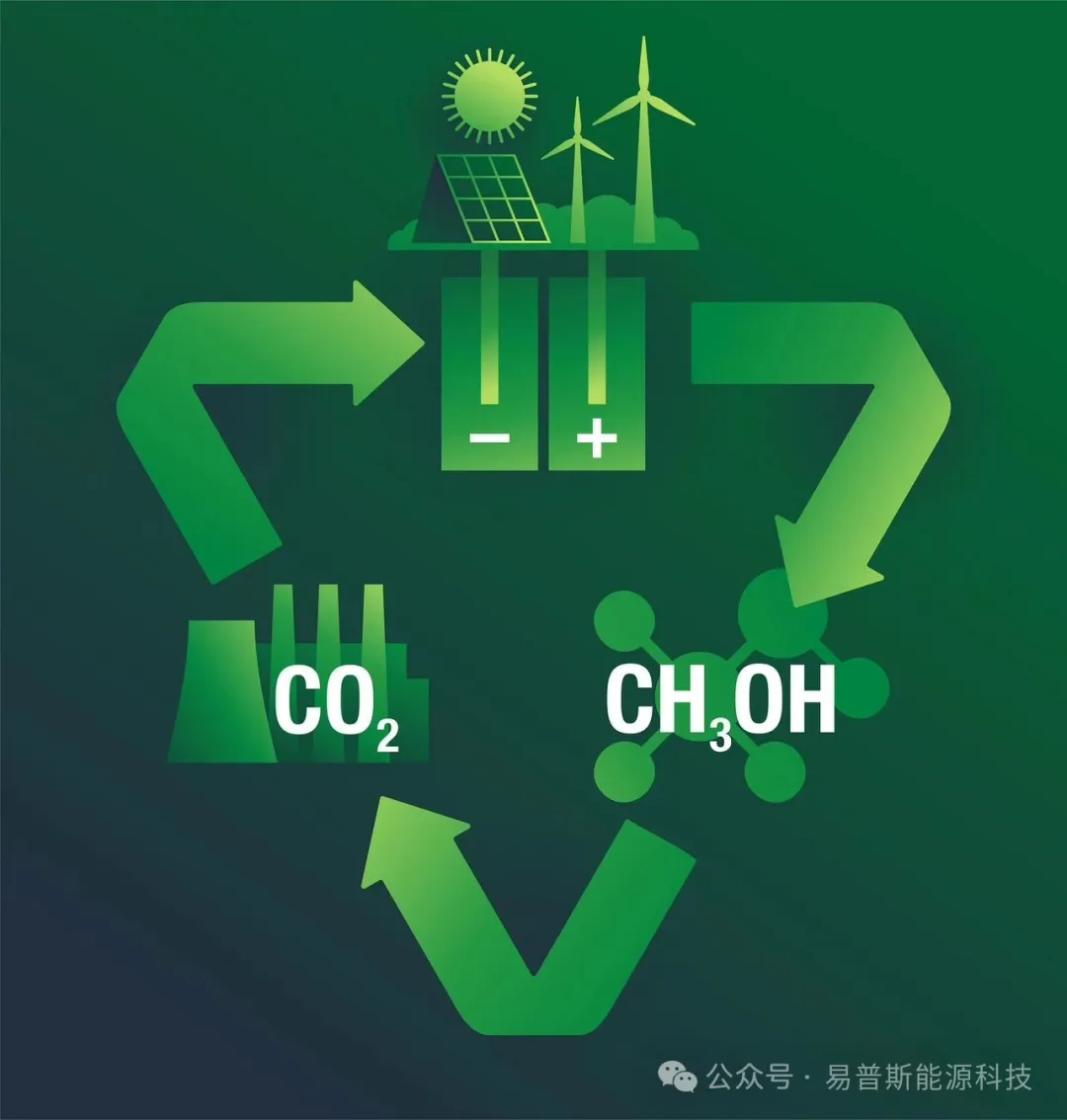
The integration of Green Hydrogen, Direct Air Capture (DAC), and Methanol synthesis is emerging as one of the most practical and scalable system-level pathways for carbon reduction.
Rather than focusing solely on carbon capture, this approach enables CO₂ to be converted into transportable, storable, and tradable fuels — transforming emissions into economic assets.
Why “Green Hydrogen + DAC + Methanol”?
Within the low-carbon ecosystem, each component plays a distinct role:
Direct Air Capture (DAC)
Provides a point-source independent CO₂ supply, enabling flexible and distributed carbon sourcing beyond traditional industrial emissions.
Green Hydrogen
Produced via PEM or AEM water electrolysis systems, green hydrogen delivers renewable, scalable reducing power essential for CO₂ conversion.
Methanol
One of the most commercially viable carbon-neutral or carbon-negative liquid energy carriers available today. Methanol can serve multiple sectors, including:
Transportation fuels
Maritime fuel applications
Chemical feedstock
Energy storage and trading
When these technologies are integrated at the engineering level, CO₂ is no longer merely captured — it becomes part of a circulating fuel and chemical economy.
This integrated pathway is gaining significant traction across North America in synthetic fuels, e-fuels, and Power-to-X (PtX) developments.
Beyond Equipment Supply: A System-Level Engineering Collaboration
The current North American project is not a simple equipment procurement contract. Instead, it represents a system-level engineering collaboration focused on the DAC-to-Methanol pathway.
Key areas of cooperation include:
Modular DAC capture and desorption unit integration
Engineering coupling of PEM / AEM water electrolysis hydrogen systems
Process boundary definition for CO₂–H₂ methanol synthesis
Energy and mass balance optimization
Operational strategy and scale-up pathway design
The core evaluation criteria are not laboratory performance metrics, but engineering fundamentals:
Can the system operate continuously?
Can it be scaled effectively?
Can it deliver long-term operational stability?
These questions define the transition from concept to industrial deployment.
EPC Energy’s Role: Turning Technical Feasibility into System Usability
In the fields of DAC, green hydrogen, CO₂ conversion, and synthetic fuels, the primary challenge is rarely isolated material performance. Instead, it lies in system integration:
Defining clear system boundaries
Coordinating multiple subsystems
Balancing cost, stability, and safety
EPC Energy positions itself not merely as an equipment manufacturer, but as a low-carbon system integrator.
Our engineering methodology spans:
Laboratory validation to pilot scaling
Demonstration systems to full engineering deployment
Unit-level optimization to complete process integration
The North American DAC-to-Methanol project exemplifies this system-oriented approach in an international context.
From a Chinese Engineering Team to Global Low-Carbon System Delivery
As this project advances, EPC Energy continues to strengthen its engineering expertise across:
Direct Air Capture (DAC)
Green hydrogen production (PEM / AEM water electrolysis)
CO₂ conversion and methanol synthesis
PtX and e-fuels system integration
These accumulated capabilities support replicable, scalable engineering solutions for carbon-negative and synthetic fuel projects worldwide.
In the era of decarbonization, our guiding principle remains clear:
What changes industries is not conceptual innovation alone, but systems that can operate reliably over the long term.
About EPC Energy
Electro-Power-Cell Energy Technology (EPC Energy) is an engineering-driven company focused on low-carbon and electrochemical systems, specializing in:
Green hydrogen production (PEM / AEM electrolysis)
DAC and CCUS engineering systems
CO₂ electrochemical conversion
PtX and synthetic fuel integration
We are committed to transforming advanced technologies into operational, scalable, and long-term deployable engineering solutions that support global decarbonization goals.